
Richmond County Has No Public Blotter
No public Staten Island blotter combines names, arrest dates, charges, and booking photos. That is the first thing to know. Richmond County is simply Staten Island, one of New York City's five boroughs. Two agencies split the work. NYPD makes the arrests. City corrections holds people after arraignment. Neither posts a Staten Island names-and-photos roll for the past few days. So the question drives the search. Current custody belongs with the NYC DOC Person in Custody Lookup. Arrest trends sit with NYPD Open Data and weekly precinct reports, case status with the courts, and a single named record with a FOIL request.
Read Richmond County Arrest Sources
Match the source to the question before anything else. Finding one named person is a different task from tracking borough-wide arrest trends, so the channel changes with the goal. Stay official, and note each source's update date.
- For current city jail custody, search NYC DOC by NYSID, book-and-case number, or name. It does not cover all people arrested by NYPD.
- For current-year incident analysis, open the NYPD Arrest Data Year to Date dataset and filter
ARREST_BOROtoSfor Staten Island. - For several years of context, use the historic NYPD arrests dataset, which covers 2006 through the last complete calendar year.
- For precinct-level trends, read the weekly Patrol Borough Staten Island and 120th, 121st, 122nd, and 123rd Precinct reports.
- For a named case outcome, check WebCriminal where available or contact Richmond County Criminal Court.
- For an identified non-exempt record beyond public interfaces, submit a focused request to NYPD or DOC through NYC OpenRecords.
For a person who may still be in police custody, the 24 Hour Arrests route fits better. It leans on NYC311's phone instructions instead.
Richmond Arrest Data Fields
NYPD Open Data works at the incident level, built for counts and patterns rather than a person-based arrest log. Its own fields show that split.
| Field | What the NYPD dataset provides |
|---|---|
| ARREST_KEY | A unique key for the reported arrest incident |
| ARREST_DATE | The recorded arrest date |
| Offense information | Crime, offense, law-code, and category descriptions |
| ARREST_BORO | Borough code; S isolates Staten Island records |
| ARREST_PRECINCT | The reported precinct number |
| Geography | Coordinates, latitude, longitude, and location fields |
| Demographic categories | Published age group, sex, and race fields |
| Name, photo, custody, disposition | Not included in the public arrest datasets |
Birth dates, NYSID numbers, book-and-case numbers, release dates, holding locations, and bail details all stay out of the public data. Never fill them from an unofficial roster. A DOC custody result can add named case or location fields. That record starts at jail entry. The official NYPD year-to-date arrest dataset is published through its public data interface. The two records answer different questions.
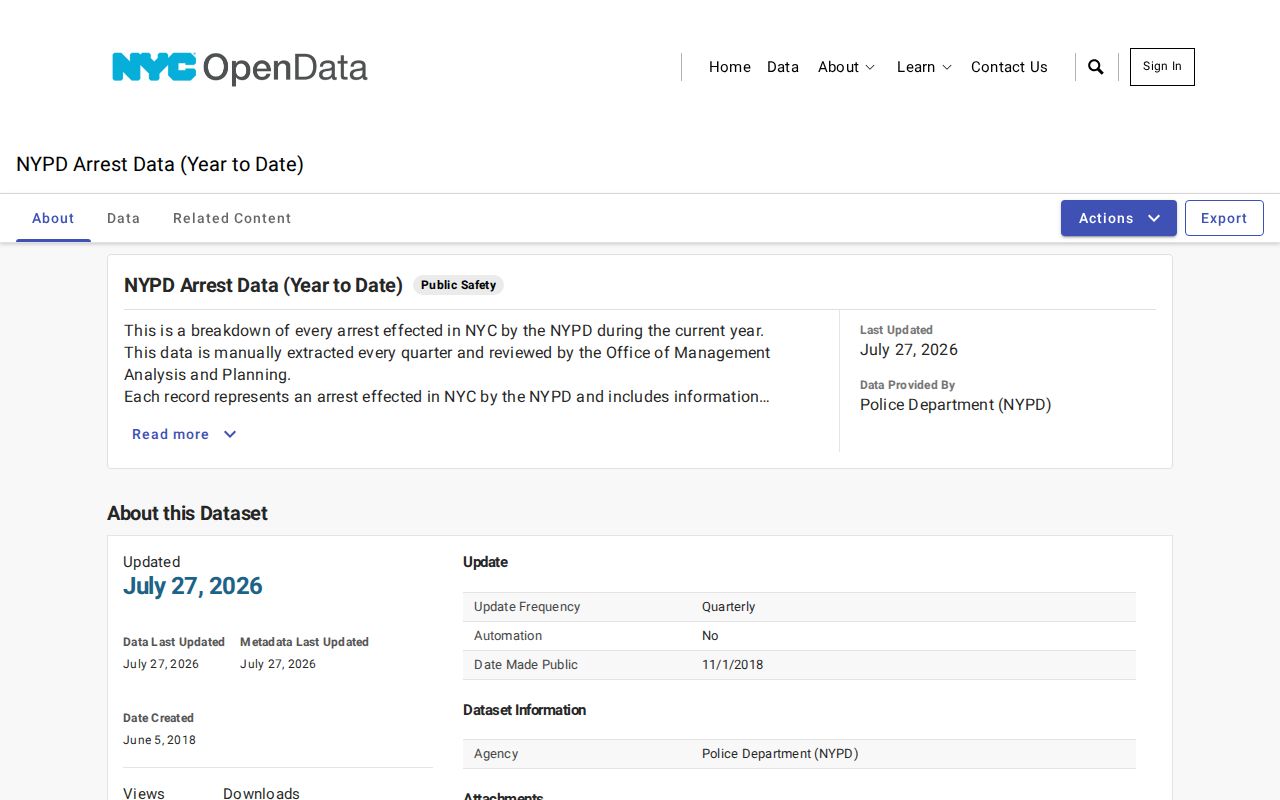
The interface supports filters and simple analysis for anyone counting arrests across the borough. It will not yield a Richmond County name list. No mugshot roster sits inside it either.
Richmond Arrest Trends Need Dates
The 2026 year-to-date data lists 5,169 Richmond County, or Borough S, arrest incidents. That figure comes from a dated quarterly dataset. It is not a headcount of unique people. It counts incidents, not jail admissions or current detainees. Later corrections and quarterly updates can shift the number. Grouping by date shows spikes too. April 1 logged 57 incidents. June 4 reached 50. April 24 and May 12 each recorded 46, and April 8 came in at 45. Those dates show why a precise source date and filter matter. They prove no weekday pattern and no jail surge. Assault-related offenses top the published offense descriptions. Vehicle and traffic laws, miscellaneous penal law, and petit larceny follow. Felony assault, dangerous drugs, criminal mischief, grand larceny, dangerous weapons, and offenses against public administration round out the list. These are dataset categories. They cannot be pinned on a person without that person's official arrest record and later court context. Note: The NYPD year-to-date dataset updates quarterly, so it cannot say who was arrested yesterday or who remains in custody today.
Richmond Arrest Reports Use Three Clocks
Three different clocks govern Richmond County arrest reporting. The NYPD borough and precinct reports arrive weekly and cover Patrol Borough Staten Island plus its four precincts. The year-to-date dataset updates quarterly. The historic arrest dataset runs annually and reaches back to 2006, yet none of these clocks produces a rolling names-and-photos feed.
| Official source | Cadence or range | Useful for |
|---|---|---|
| Precinct and borough statistics | Weekly | Recent area and precinct trend context |
| NYPD Arrest Data YTD | Quarterly | Current-year incident counts and categories |
| NYPD Arrests Data Historic | Annual; 2006 through prior year | Long-range borough analysis |
| NYC DOC lookup | Custody-event updates | One person’s current city jail status |
| Court records | Case-event updates | Arraignment, appearances, and disposition |
Weekends do not create a Monday arrest log. Newsrooms publish on their own schedule, driven by editorial choice rather than any booking cycle. Each system moves on its own clock. Keeping the records separate beats pretending they share one posting cycle.
Precinct Posts Are Not Arrest Logs
Each Staten Island precinct, from the 120th through the 123rd, runs its own contact page and social accounts. Posts there share safety tips and enforcement updates. That content is selective. It fades fast, too. So a precinct feed cannot stand in for a Richmond County arrest log, and a quiet account proves nothing about who was arrested.
Treat any precinct post as a starting clue. Confirm what actually happened with the proper record custodian or with the court before drawing conclusions. Save the post's date and exact wording. A wanted notice is not an arrest record. A photo attached to a police post may be a surveillance still or publicity shot rather than a booking photo.
Local news deserves the same caution. Richmond County District Attorney releases are official but curated, covering an indictment, plea, or sentence rather than every arrest. SILive Crime & Safety, NY1 Staten Island, Staten Islander, and ABC7 report events as they break. None of them is a custody database. Call an image a mugshot only if its source clearly does.
Richmond Arrest Log Versus Custody
A statistical incident can linger in Open Data long after a person leaves custody. The reverse happens too. A lockup hold may be missing from DOC entirely. The official NYC DOC search interface answers one narrow question: whether a named person is in custody after arraignment. It cannot rebuild a weekend of Staten Island arrests.
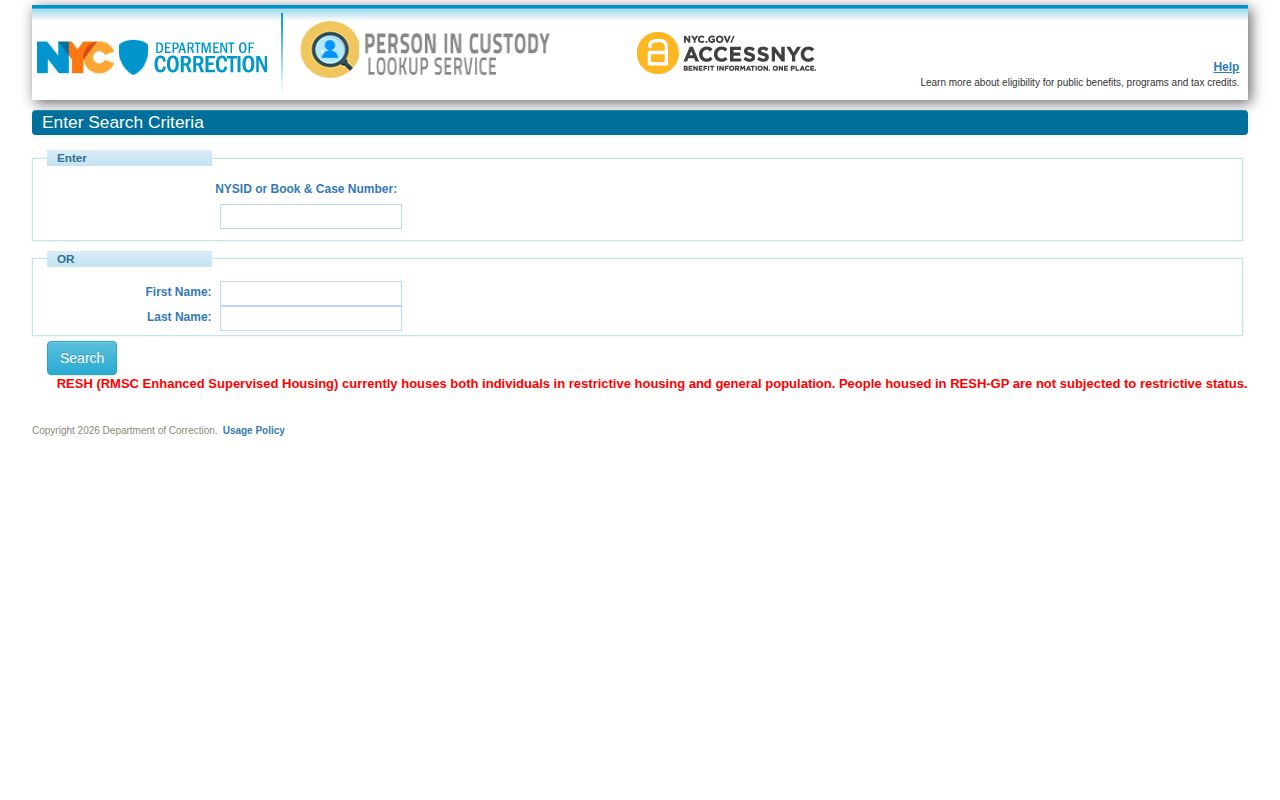
The screen is a locator, not an arrest archive. Its basic interface shows no public photo field. After intake, DOC may list a holding location, book-and-case number, charges, court details, bail or bond, NYSID, and release information. A person released on a DAT, bail, or recognizance before DOC housing may never show up. That gap matters for anyone counting arrests. For how a case ends, check Criminal Court rather than a custody snapshot.
Richmond Arrest Archives and Retention
The state's LGS-1 schedule, issued by the New York State Archives, covers record series such as arrest summary logs, case investigation files, identification records, fingerprints, photographs, and cumulative arrest information. Retention depends on the series. New York City keeps its own policies. It also maintains a supplemental retention schedule. These rules govern how long agencies keep records. They never promise online publication or public release.
Retention, access, and publication are three different things. A record can be kept yet sealed or exempt. A court entry may vanish from an ordinary public search while remaining in a controlled system. A news story can stay online after government sealing. No single deletion date covers every police report, photograph, court file, and statistical extract.
For old anonymous trends, the annual NYPD historic dataset is the right tool. For a known court case, try WebCriminal or the Richmond County Criminal Court clerk. For an identified police or DOC record, file a narrow FOIL request. Name the agency, the person, the approximate date, and the record type. Request segregable portions and an explanation for anything withheld. Blanket demands for every Richmond County photograph fit neither the official access structure nor New York's privacy treatment of arrest and booking images.
Note: An archive rule can require an agency to keep a record even when it is sealed, restricted, exempt, or absent from public web pages.